 Bromley Electrical Services
Guide
What affects the cost of an EICR in Bromley?
The cost of an EICR in Bromley depends on property size, circuits, access and condition. Here is how pricing works and what to ask for in a written quote.
- Send a short enquiry
- Covering Greater London
- EICR and related services
The cost of an EICR in Bromley depends mainly on the size of the property, the number of circuits and consumer units to be tested, and how easy everything is to reach. Pricing may be a fixed price or based on time, so the safest way to know your cost is to ask for a written quote that says exactly what it covers. An EICR is an Electrical Installation Condition Report, the document that records the results of an inspection and testing of your fixed wiring.
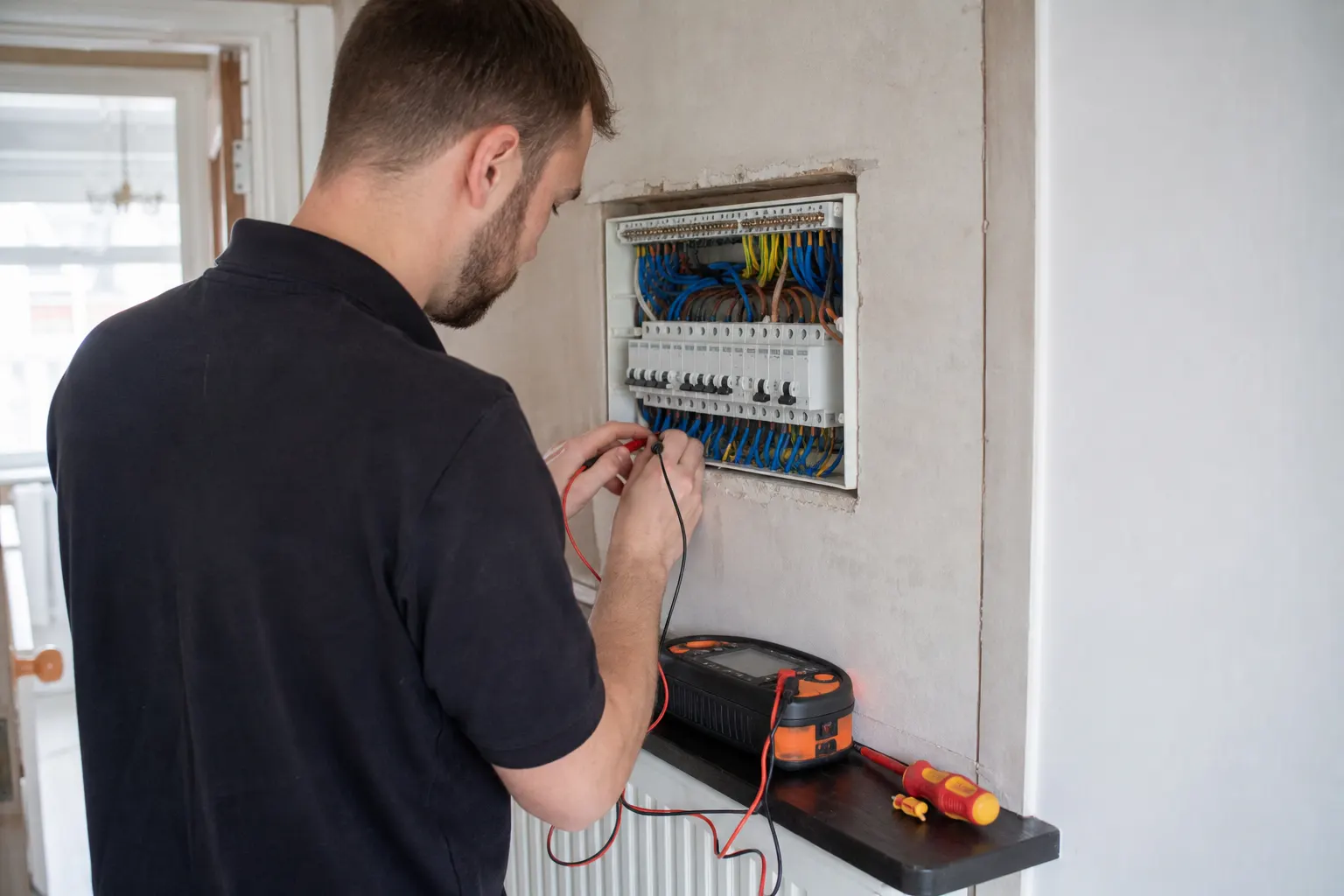
How EICR pricing is usually built
Electricians price this work in different ways. Some give a fixed price for the whole inspection and report, often after asking a few questions about the property. Others charge an attendance fee plus an hourly rate, or a rate per day for larger sites. Neither approach is automatically better. What matters is that you know which one you are being offered.
A good quote should say whether the condition report itself is included, whether any travel or parking charges apply, and what happens if the job takes longer than expected. If any of that is unclear, ask before you book.
Size and complexity of the installation
The biggest factor is how much there is to inspect and test. A small flat with one consumer unit and a handful of circuits needs far less time than a large family house with extensions, a garage or a garden outbuilding. Every circuit, socket, light fitting and fixed appliance connection in the sample being checked adds to the testing time.
The number of consumer units matters too. Some properties have more than one, perhaps after a loft conversion or an extension. Each board needs to be inspected and every circuit on it tested.
Commercial properties are usually more involved than homes. A commercial EICR may cover several distribution boards, lots of circuits, emergency lighting links and areas that can only be tested out of hours. All of that affects the time needed and therefore the cost.
Access, occupancy and condition
Testing means switching circuits off, sometimes for a while, so the electrician needs clear access. Furniture in front of sockets, locked rooms, stored belongings around the consumer unit and a loft that is hard to reach all slow the work down. Clearing these areas beforehand can keep the inspection shorter.
Occupancy plays a part as well. For landlords, arranging access with tenants can mean extra visits if nobody is in. Older installations can also take longer, because wiring may be harder to trace, labelling may be missing or earlier alterations may not be documented.
The time of day can affect the price if you need the work done in the evening or at a weekend. Say so when you ask for the quote.
Remedial work is a separate cost
The inspection tells you the condition of the installation. Any repairs that come out of it are normally quoted separately. This is why a very low price for the report alone does not tell you what you will spend overall.
The report uses codes. C1 means danger is present and needs immediate action. C2 means potentially dangerous. C3 means improvement is recommended. FI means further investigation is needed. A report with a C1, C2 or FI is generally recorded as unsatisfactory, and the work to put those items right adds to the total. Common causes include damaged or outdated consumer units, missing protection, poor earthing or bonding, and overloaded or deteriorated circuits.
Ask the electrician whether they would quote for any remedial work and how they would explain the findings to you. You are free to get the repairs done elsewhere.
How to get a quote you can compare
Give every electrician the same information: the type of property, roughly how many bedrooms or rooms, how many consumer units, whether there are outbuildings, and whether the installation is domestic or commercial. Mention if the report is for a landlord, a sale or simply peace of mind.
Then ask each one to confirm in writing what is included, how the price is calculated, and whether the electrician is suitably qualified to carry out inspection and testing. Choose a qualified electrician who can explain their registration and qualifications, and feel free to ask to see them.
Rules on how often inspections are needed, especially for rented property, can change. Check GOV.UK for the current position before you decide on timing.
Common questions
How much should I expect to pay for an EICR?
It varies with the size and type of property, the number of circuits and consumer units, and access. Rather than relying on a general figure, ask for a written quote that states what is covered.
What makes an EICR fail?
An unsatisfactory result is usually linked to C1 (danger present), C2 (potentially dangerous) or FI (further investigation required) observations. Examples include damaged wiring, missing protection and faulty earthing or bonding.
Can a normal electrician do an EICR?
Only if they are competent in periodic inspection and testing, which is a different skill from installation work. Ask what qualifications and registration they hold and whether they carry out EICRs regularly.
Can you sell a house with a failed EICR?
Generally yes, as there is no general bar on selling. However, buyers and their solicitors may ask about the report, and they may negotiate or ask for repairs. Get advice from your solicitor and check GOV.UK for the current rules.
Useful sources
- NICEIC: The electrical contracting body, with a register to check an electrician.
- Citizens Advice: Free, independent advice on your rights when paying for work.