 Bromley Electrical Services
Guide
How often should an EICR be carried out?
Most rented homes need an EICR at least every five years, owner-occupied homes about every ten, and commercial premises often more frequently.
- Send a short enquiry
- Covering Greater London
- EICR and related services
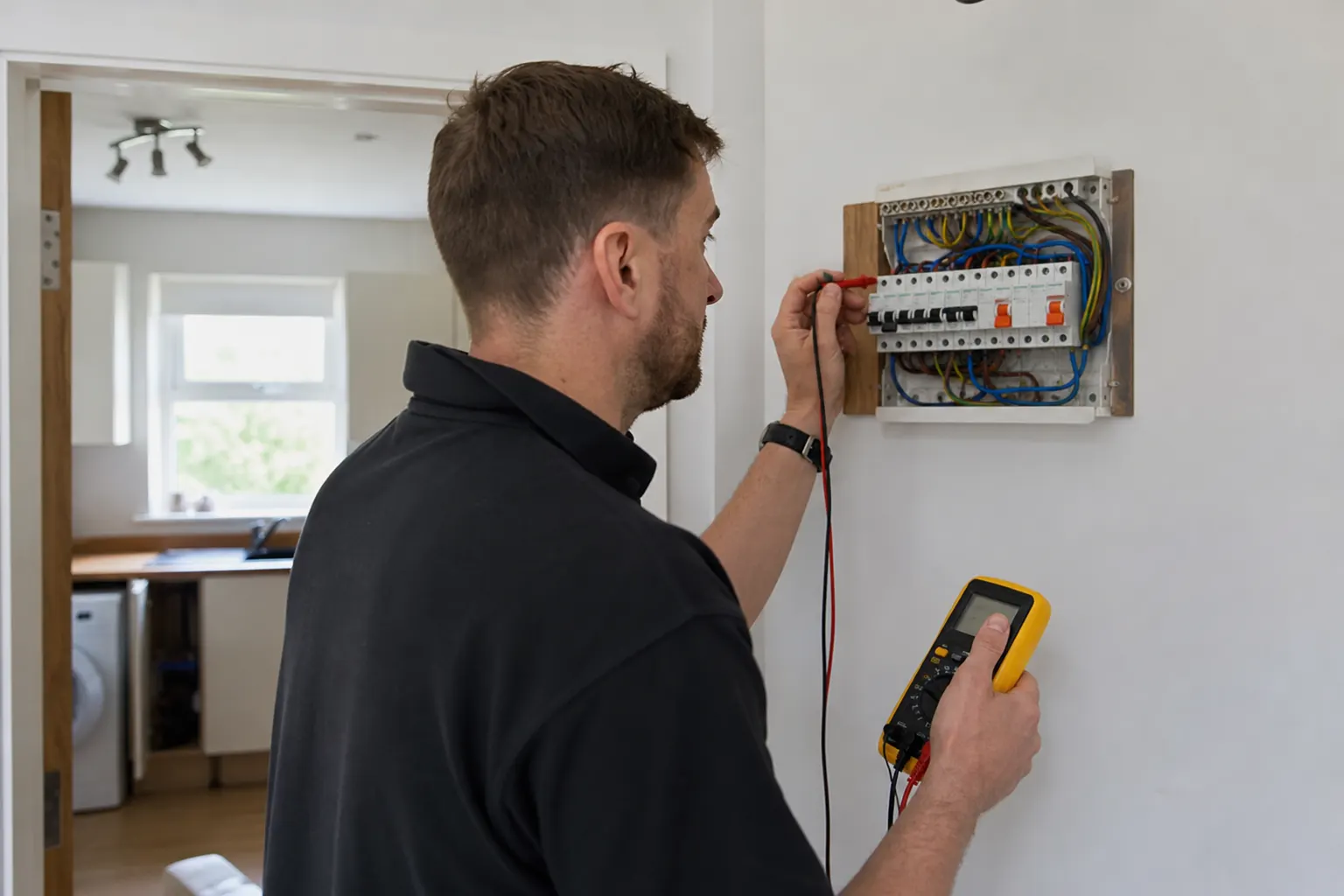
An EICR (electrical installation condition report) is generally needed at least every five years for rented homes, and sooner if the inspector sets a shorter interval. Owner-occupied homes are commonly advised to have one about every ten years, and many commercial premises are inspected more often. The date printed on your report is the one to follow.
The short answer by type of property
There is no single interval that suits every building. The usual pattern is:
Rented homes: at least every five years. Owner-occupied homes: commonly about every ten years, or when you move in to a property you have just bought. Commercial premises: often every five years, but sometimes less where the use or the environment is demanding.
These are general guides. The inspector who carries out the testing records a recommended date for the next inspection based on what they actually find, so a shorter gap is always possible.
Landlords and rental properties
If you let a home in the private rented sector in England, there is a legal requirement for the electrical installation to be inspected and tested at intervals of no more than five years. Tenants should be given a copy of the condition report, and a copy is also needed for a new tenant at the start of a tenancy. Local councils can ask to see it.
So the answer to "how often does an EICR need to be done on a rental property" is at least every five years, or sooner if the report says so. How long an EICR is valid in the UK depends on that recommended date, not on a fixed calendar period. Rules differ between England, Scotland, Wales and Northern Ireland and they can change, so landlords should check GOV.UK for the current position.
Homes you live in
For an owner-occupied home, an EICR is not usually a legal requirement, but it is good practice. Ten years is the commonly quoted gap for a settled household. Consider a shorter interval if the wiring is old, if the consumer unit has never been replaced, or if you have had signs of trouble such as tripping circuits, warm sockets or flickering lights.
It is also sensible to arrange an inspection when buying an older property, so that you know the installation condition before you start work or move in.
Commercial premises, three years or five
People often ask whether an EICR is every three years or every five. In practice, five years is the typical figure for standard homes and offices, while three years or even less may be recommended for places with heavier use, damp or dusty conditions, public access, or higher risk. Examples include shops, workshops, and some care or healthcare settings.
If you are searching for an interval for a specific organisation, such as the NHS, remember that larger bodies usually set their own policies on top of the basic expectations. For your own business, the interval written on your latest report is what counts, and your insurer or licensing body may ask for something stricter.
You may also see questions about particular calendar years, such as 2021 or 2022. The inspection interval does not reset with a year. It is worked out from the date of your last report and the inspector's recommendation.
What can bring an EICR forward
Do not wait for the due date if something changes. Common triggers include:
A new tenancy or a change of occupier. A report that is marked unsatisfactory, followed by remedial work. Major alterations, such as an extension, a rewire or a new consumer unit. Damage from a leak, fire or flood. Signs of faulty wiring, such as burning smells, scorch marks or repeated tripping.
If you are worried about electrical work that someone else has done, ask for the paperwork for it first. Unsafe work can also be reported to the relevant local authority or building control body, and GOV.UK explains the current route.
What the report tells you and what happens next
During the inspection and testing, the electrician checks the wiring, the consumer unit, earthing and bonding, and the condition of accessories. They then issue a condition report with an overall result of satisfactory or unsatisfactory, and observation codes for any problems.
An unsatisfactory result means remedial work is needed. For rented properties, this generally has to be completed within a short deadline, commonly 28 days or sooner if the report says so, and the landlord should then provide written confirmation to the tenant. Keep every report safe, because it shows the property's history and the date the next one is due.
When arranging an inspection, ask who will carry out the testing and what qualifications and registrations they hold, and ask for a written quote. How the job is priced depends on factors such as the size of the property, the number of circuits, access, and how long the testing takes. Bromley Electrical Services provides EICR inspection and testing for Bromley and the wider Greater London area.
Common questions
Is an EICR 3 years or 5 years?
Five years is the usual maximum for rented homes and many commercial premises. Three years, or less, may be recommended where the use or conditions carry more risk. The inspector's recommended date on your report decides it.
How long is an EICR valid for in the UK?
It is valid until the next inspection date recorded on the report. For rented homes that is no more than five years, and it can be shorter. It may also be overtaken sooner by major changes to the installation.
How often does an EICR need to be done on a rental property?
At least every five years, and at the start of a new tenancy you must provide the current report to the tenant. Rules can change, so landlords should check GOV.UK for the current requirements.
How much does it cost to have your electrics checked?
It varies with the size and age of the installation, the number of circuits, access and how long the testing takes. The sensible approach is to ask for a written quote for your property.
Useful sources
- NICEIC: The electrical contracting body, with a register to check an electrician.
- GOV.UK: electrical safety standards in the private rented sector: The official guidance for landlords, tenants and councils on electrical safety checks.