 Bromley Electrical Services
Guide
How to get an EICR
Book an EICR by asking a qualified electrician to inspect and test your installation. Here is what to prepare, what happens and what affects the cost.
- Send a short enquiry
- Covering Greater London
- EICR and related services
To get an EICR (electrical installation condition report), ask a suitably qualified electrician to carry out inspection and testing of your fixed wiring and give you a written report. Bromley Electrical Services provides EICR work for homes and rental properties in Bromley and across Greater London. This guide covers the steps, what to prepare and what to do with the result.
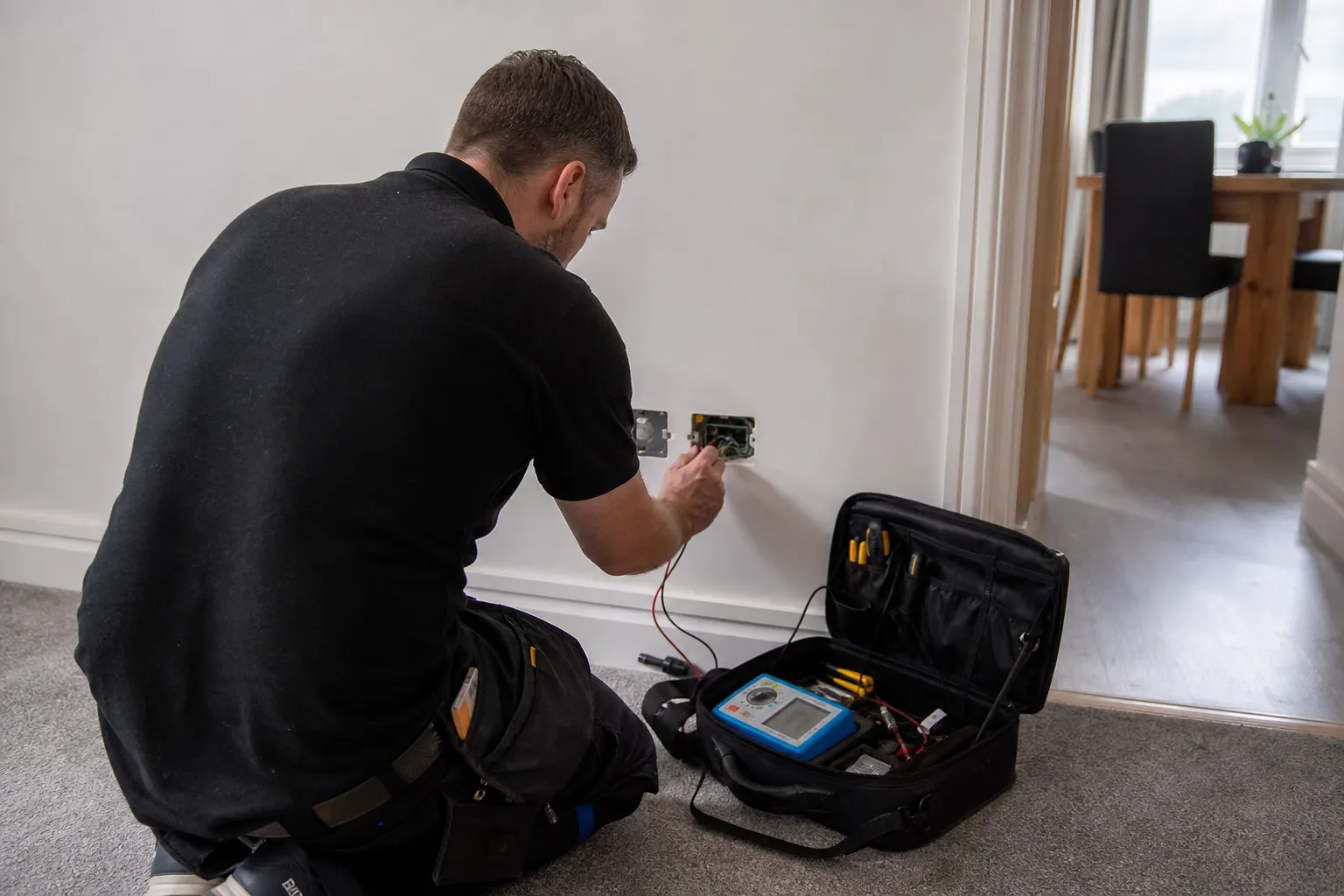
What an EICR is and who needs one
An EICR is a formal record of the electrical installation condition in a property. An electrician inspects and tests the fixed wiring, the consumer unit (fuse box), sockets, switches, lighting circuits and earthing and bonding. The aim is to find damage, wear, overloaded circuits and anything that is not safe or does not meet the regulations that applied to the work.
Homeowners often ask for one when buying or selling a property, or when an installation is old and has never been checked. Landlords need one to show the installation is safe for tenants. For rented property, the report is commonly renewed at intervals of up to five years, or sooner if the report says so. The rules can change and differ between parts of the UK, so check GOV.UK for the current position.
Steps to get an EICR
First, decide why you need it: a landlord requirement, a sale, a mortgage or insurance query, or peace of mind. This helps the electrician plan the visit.
Second, gather basic details: the type of property, roughly how many circuits or floors there are, the age of the wiring if you know it, and any previous reports or certificates. Mention known problems such as tripping circuits, warm sockets or flickering lights.
Third, ask for a written quote and a suitable appointment. The inspection must take place on site, so you can start the process online but you cannot complete a genuine EICR without someone visiting and testing.
Finally, arrange access to every room, the consumer unit, outbuildings and any garage or garden supply that is part of the installation.
Choosing who carries out the inspection
Not every person who calls themselves an electrician is the right person for this job. An EICR needs someone competent in inspection and testing, who knows the current wiring regulations and can judge what they find. Ask which qualifications they hold for periodic inspection and testing, whether they belong to a recognised competent person scheme, and whether they carry insurance. These are questions to put to any electrician you are considering.
You cannot do your own EICR in any meaningful sense. Even a skilled homeowner lacks the calibrated test equipment, training and independence a valid report relies on. Landlords, agents, mortgage lenders and insurers will generally expect a report from a qualified professional.
What happens during the inspection
The electrician will usually need to switch the power off for parts of the visit, so plan around computers, fridges and anything else that cannot be unplugged without trouble. They carry out visual checks, then test the circuits for things like continuity, insulation condition and protective device operation.
Afterwards you receive a report listing observations. Items are coded by seriousness: some mean danger is present or potentially present and need urgent attention, some are recommended improvements, and some need further investigation. The overall outcome is either satisfactory or unsatisfactory. An unsatisfactory result is not a failure of you personally. It means something needs putting right.
What affects the cost
No honest figure can be given without seeing the property, because several things change the price. Larger homes with more circuits take longer to test. Access matters: locked rooms, cluttered cupboards or a hard-to-reach consumer unit add time. Older or altered wiring can take longer to trace and assess.
Electricians price this in different ways: a fixed price for the inspection, an hourly rate, or a callout fee plus time. Evening or weekend visits may be priced differently from weekday ones. Remedial work is normally separate from the inspection, with its own parts and labour. Ask for a written quote that says exactly what is included, whether a report is issued as standard and how any extra work would be priced.
After the report: remedial work and records
If the report contains urgent issues, get them dealt with promptly. The electrician who inspected can quote for remedial work, but you are free to compare quotes. Once the work is done, ask for confirmation in writing, and an updated report or certificate where appropriate.
Keep the EICR and any related paperwork safe. Landlords should be aware of their duties to give copies to tenants and to local authorities if asked. A landlord who does not meet the requirements can face enforcement action, including a financial penalty from the local council. Check GOV.UK for the current rules that apply to you.
Common questions
Can any electrician do an EICR?
No. The person needs to be competent in inspection and testing, with up-to-date knowledge of the wiring regulations and proper test equipment. Ask about their qualifications, scheme membership and insurance before you book.
Can you get an EICR online?
You can request one and arrange the booking online, but the inspection itself must be carried out in person at the property. Be cautious of anyone offering a report without visiting.
Can a landlord be fined for having no EICR?
Yes. Where an EICR is required for a rented property, a local authority can take enforcement action, which may include a financial penalty. Rules vary by nation and can change, so check GOV.UK for the current position.
What is an EICR check?
It is the inspection and testing of a property's fixed electrical installation, recorded in a condition report. It shows whether the installation is safe to keep using and lists any remedial work needed.
Useful sources
- NICEIC: The electrical contracting body, with a register to check an electrician.
- GOV.UK: electrical safety standards in the private rented sector: The official guidance for landlords, tenants and councils on electrical safety checks.